Book and Movie Review: The Odyssey - Homer
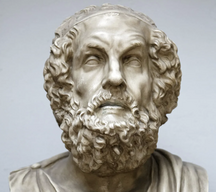
This is my review of both the book: The Odyssey by Homer (Greek poet) and the movie: The Odyssey directed by Christopher Nolan (British-American film maker).
The Odyssey (Book Review)

I decided to read The Odyssey by Homer (Greek poet) end-to-end as a personal challenge before the Christopher Nolan movie came out on Fri. 7/17/26. I was thankfully able to finish reading the book on the same day that the movie came out after ~one month of intensive focus. Under normal circumstances, I think it would have been extremely difficult for me to muster the motivation and energy to read a book such as The Odyssey, a book that’s been known to be quite challenging to read. I wanted to challenge myself because I had never read The Odyssey before in high school, so I viewed the movie release as a nice, time-boxed opportunity to immerse myself in Odysseus’ 20-year hero’s journey. I have no background in classics, but I’ve become an amateur classicist and find that I enjoy reading and learning about the ancient world quite a lot. I also didn’t want to pay for a copy of The Odyssey, so I found a translation of the book online for free by Butcher and Lang that was first published in the 1800s. It’s written in an archaic style of prose that’s very uncommon today. To say it was difficult to understand the English style would be a huge understatement! But somehow I did it and made it through the book end-to-end. Though The Odyssey is a fictional book in the form of an epic poem, it was a really interesting book once you got into it and actually started understanding the plot. I also used a youtube channel Moan, Inc. after reading each chapter to reinforce the material and that helped a lot. Here’s everything that I’ve learned!
The Odyssey has 24 books that have a nonlinear narrative structure. One has to pay very careful attention to find out if the current events described are happening now or have already happened in the past. There’s lots of flashbacks and sometimes even flashbacks of flashbacks as you read the book. I’m going to summarize The Odyssey’s 24 books as how they appear by book order first and then I’m going to summarize The Odyssey in how the plot plays out by event. Only read this section if you don’t want spoilers for the movie!
Summary by Books in Chronological Order
The Telemachy (Books 1-4): Odysseus does not appear. The poem opens with Telemachus, the son he left behind, and on an Ithaca where his household is being ravaged by the wooers.
- Book 1 (Ithaca) - The gods in council; Athene rouses Telemachus: Poseidon is away visiting the Ethiopians, so Athene uses his absence to get Zeus to agree that Odysseus can finally come home. She goes down to Ithaca disguised as a visiting sea-captain named Mentes. What she finds is a house full of men who have moved in, are eating their way through the family herds, and are pressuring Odysseus’ wife Penelope to pick one of them and remarry. She tells Telemachus that his father is still alive, and that he needs to stop sulking and act: call a public meeting, then go find news of Odysseus himself. That night, for the first time in his life, Telemachus sends his mother upstairs and tells the wooers to their faces that the house is his.
- Book 2 (Ithaca) - The assembly and Telemachus sails by night: Telemachus gathers the men of Ithaca and asks them to make the wooers leave. Antinous, the worst of them, turns it around and blames Penelope. For three years, he says, she has been stalling: she promised to choose a husband once she finished weaving a burial cloth for Odysseus’ father, and every night she quietly unpicked what she had woven that day, until one of her maids told on her. The assembly does nothing. So Athene, now disguised as an old family friend called Mentor, quietly finds Telemachus a ship and a crew, and he sails for Pylos after dark without telling his mother he is going.
- Book 3 (Pylos) - Nester at Pylos: Nestor, who is very old and fought at Troy, welcomes Telemachus in the middle of a beach sacrifice and talks. He explains how the Greek army fell apart into arguing factions after the war and sailed home in scattered groups, and how Agamemnon came home to be murdered by his wife’s lover, and how Agamemnon’s son Orestes grew up and killed the murderer. That story is not idle chat. It is what a young man is supposed to do when his father’s house is stolen, and Telemachus is meant to hear it that way. But Nestor has no news of Odysseus, so he sends the boy on to Sparta by chariot with his own son as company.
- Book 4 (Sparta) - Dinner in Sparta and a wrestling match with a sea god: Menelaus and Helen — the couple the whole Trojan War was fought over — host him beautifully, and both of them end up in tears remembering Odysseus. Menelaus describes his own trip home: stuck for weeks on an island off Egypt with no wind, he was told to ambush Proteus, a sea god who could turn into anything, and hold on through every shape until he (Proteus) was tired out by his captors into answering questions. What Proteus told Menelaus was that Odysseus is alive, stranded on an island, weeping, held there by a goddess named Calypso. Meanwhile, back in Ithaca, the wooers realise Telemachus has slipped away and they park an armed ship in the strait to kill him when he sails back. Penelope finds out and is terrified, until a dream sent by Athene tells her he will be safe.
The Wanderings (Books 5-12): Odysseus enters the poem in the twentieth year of his absence, and his past arrives four books later, in his own voice.
- Book 5 (Ogygia) - Calypso’s island and then the raft and the storm: Hermes delivers the gods’ order to Calypso, and she is furious about it. She has kept Odysseus for seven years and has offered to make him immortal, and he has turned that down to go home to an ordinary wife who will grow old. She lets him go anyway. He builds a raft, sails seventeen days, and is nearly there when Poseidon spots him and smashes the raft apart in a storm. A sea nymph hands him a magic veil that keeps him afloat. He swims for two days, drags himself onto the beach of an island called Scheria, crawls into a pile of dead leaves and sleeps.
- Book 6 (Scheria) - Nausicaa at the river: Athene nudges Nausicaa, the local princess, into taking the laundry down to the river with her maids. They play with a ball and the noise wakes Odysseus, who comes out of the undergrowth naked, filthy and covered in salt. Every maid runs. Nausicaa does not. He talks his way out of the dilemma with real charm, careful not to touch her, and she gives him clothes, food and directions to the palace - plus one piece of advice that turns out to matter enormously: when you get there, ignore my father and go straight to my mother.
- Book 7 (Scheria) - The palace of Alcinous: Wrapped in a mist by Athene so nobody stops him, Odysseus walks through a palace with bronze walls and an orchard where fruit never stops ripening, and drops to his knees in front of Queen Arete. King Alcinous promises to send him home in one of their ships, wherever home turns out to be. When Arete recognises the clothes he is wearing as her daughter’s, he explains about Calypso and the shipwreck — but still does not say his name.
- Book 8 (Scheria) - Games and the song that breaks Odysseus: At the athletic games a young man needles the guest for looking like a merchant rather than an athlete, and Odysseus answers by throwing the discus further than anyone. Then the blind singer Demodocus performs: first a quarrel between Odysseus and Achilles, then a comic story about Ares and Aphrodite getting caught in a net, then — at Odysseus’ own request — the wooden horse and the fall of Troy. The stranger pulls his cloak over his head and sobs. Alcinous stops the music and asks him, finally, who he is.
- Book 9 (Told at Dinner) - The Cicones, the Lotus-eaters, the cyclops Polyphemus [FLASHBACK BEGINS]: Odysseus gives his name, and takes over the poem for four books. From Troy his ships sack Ismarus and are mauled by the Cicones; a storm drives them to the coast of the Lotus-eaters, whose fruit makes men forget home. Then the cave of the cyclops Polyphemus, who eats six of the crew, and the escape: the name ‘No-man’ tricks Polyphemus, the sharpened olive stake, the blinded giant, the men roped under the bellies of his rams. Odysseus shouts his real name from the ship — and Polyphemus prays to his father Poseidon, which is the reason for everything that follows.
- Book 10 (Told at Dinner) - Aeolus, the Laestrygonians, Circe: Aeolus gives him the winds tied in a bag; within sight of Ithaca the crew open it for treasure and blow the fleet back. The giant Laestrygonians spear the men like fish and destroy eleven ships of twelve. On Aeaea, Circe turns the scouting party into swine; Hermes gives Odysseus the herb moly, and Circe is mastered and turned host. A year passes there before the men remind him of home — and Circe tells him he must first go down to the house of Hades to question the prophet Teiresias.
- Book 11 (Told at Dinner) - A conversation with the dead in Hades: At the edge of the world, Odysseus enters Hades and digs a pit, pours offerings, and the dead come to drink it. The prophet Teiresias lays out the rest of Odysseus’ life: leave the Sun god’s cattle alone or lose every man, expect trouble in his own house, and later make a strange inland journey carrying an oar until he meets people who have never seen the sea. His death, he is told, will come gently, out of the sea, in old age.
- Then Odysseus sees his mother, who he did not know was dead, and who tells him she died of missing him — and whom he tries three times to hug and cannot. Then old comrades: Agamemnon, still bitter about the wife who killed him; Achilles, who says he would rather be a poor man’s farmhand alive than king of all the dead; and Aias, who is still angry at Odysseus at a perceived slight from the war and refuses to say a word to him. Eventually the crowd of ghosts gets frightening and he runs for the ship.
- Book 12 (Told at Dinner) - Sirens, Scylla and Charybdis, and the cattle of the Sun [FLASHBACK ENDS]: Warned by Circe, Odysseus stuffs the crew’s ears with wax and has himself lashed to the mast and immobilized while he hears the Sirens, whose songs lure men to their island such that they die isolated and desolate. Odysseus wants the challenge of surviving the Sirens’ songs and he’s the only man in the world who survives it. He steers past Charybdis and loses six men to Scylla, choosing that over losing all his men. On Thrinacia the crew, penned by contrary winds and starving, slaughter the cattle of Helios; Zeus answers with a thunderbolt that kills every man but Odysseus. Clinging to the wreckage he drifts nine days to Ogygia - where his story began, and where the telling stops.
The Homecoming (Books 13-24): Half the poem is spent in Ithaca in disguise. The return is quick and the reckoning is slow.
- Book 13 (Ithaca) - Home at last, and completely unrecognisable: The Phaeacians row Odysseus to Ithaca while he sleeps and they lay him gently on the beach with all his gifts stacked beside him. Poseidon, furious that the Phaeacians helped Odysseus, turns their ship to stone as it comes back into its own harbour. Odysseus wakes in a fog and does not recognise his own island. Athene turns up as a young shepherd and lets him spin one more invented life story before she laughs and drops the disguise. Together they hide the treasure in a cave, and she ages him into a bald, wrinkled, ragged beggar so he can walk into his own kingdom unnoticed. He heads for the pig farm.
- Book 14 (The Swineherd’s Hut) - Eumaeus the swineherd: Eumaeus, who looks after the pigs, calls off his dogs, gives the beggar his own dinner, and talks about his missing master with a loyalty he has no reason to fake in front of a stranger. Odysseus tests him by inventing a long backstory about being a Cretan nobleman, and swears the beggar has heard Odysseus is nearly home. Eumaeus has been lied to by too many travellers looking for a free meal and does not believe a word of it. Then he gives the old man his own cloak so he will not be cold overnight.
- Book 15 (Sparta → Ithaca) - Telemachus comes home: Athene tells Telemachus to leave Sparta, warns him about the ship waiting to kill him, and tells him where to land instead. On the way he picks up a runaway prophet named Theoclymenus. He slips past the ambush, comes ashore on the far side of the island, and goes straight to the pig farm. Meanwhile Eumaeus tells the beggar his own story: he was born a king’s son and kidnapped as a child by his nurse and sold.
- Book 16 (The Swineherd’s Hut) - Father and son, alone in a hut: Eumaeus is sent into town to tell Penelope her son is safe. The moment he is gone, Athene turns Odysseus back into himself. Telemachus assumes he is looking at a god until his father says plainly who he is, and the two of them cry so hard the poem compares them to birds whose chicks have been stolen. Then they plan. Penelope is not to be told. The weapons hanging in the great hall are to be quietly removed. In town, the failed ambush party debates simply murdering Telemachus in public, one of them talks the rest out of it, and Penelope comes downstairs and calls Antinous out in front of everyone.
- Book 17 (The Palace) - Odysseus the beggar enters his own house: Telemachus goes home first, and Odysseus follows on foot with Eumaeus, getting kicked and insulted on the road by a goatherd who works for the wooers. At the gate, an old dog called Argos — a puppy Odysseus trained twenty years ago, now lying neglected on a dung heap and full of ticks — recognises him, wags his tail, and dies. Inside, Odysseus the beggar works down the line of wooers asking for food, and Antinous throws a footstool at him. Penelope hears about it, is disgusted, and sends word that she wants to talk to this stranger who claims to have news of her husband.
- Book 18 (The Palace) - A fistfight with the resident beggar: Irus, the beggar who normally works the house, tries to chase Odysseus as the newcomer off his patch. The wooers set it up as entertainment. Odysseus drops him with one punch, deliberately holding back so as not to kill him. He quietly warns Amphinomus, the only decent man among the wooers, to go home while he still can. Amphinomus feels the warning and stays anyway. Then Penelope comes down, made radiant by Athene, tells the wooers off for eating a household instead of courting a woman properly, and walks away with expensive gifts from every one of them. A maid and then one of the wooers insult Odysseus the beggar, and another stool gets thrown.
- Book 19 (The Palace) - The old nurse Eurycleia washes his feet, recognizing the scar: Late at night, father and son carry every weapon out of the hall by lamplight. Then Penelope sits down with the beggar alone. He tells her another invented story, but fills it with details only her husband could know — right down to the brooch Odysseus was wearing when he left — and she cries, and he watches her cry and says nothing. She offers him a foot-wash from the old family nurse, Eurycleia, who raised Odysseus from birth. Eurycleia finds a scar above his knee, left by a boar when he was a boy, and knows instantly. She drops his foot, the water goes everywhere, and he grabs her by the throat and makes her swear to keep quiet. Penelope, who has missed all of this, tells him a dream about an eagle killing her pet geese, and announces that tomorrow she will hold a contest with her husband’s bow and marry whoever wins.
- Book 20 (The Palace) - The last night and the omens: Odysseus lies awake on the porch, so angry at the maids sneaking out to sleep with the wooers that he has to talk himself down, and Athene finally puts him to sleep. Morning brings omens: thunder out of a clear sky, and an exhausted woman at the mill praying out loud for it all to end. The cowherd Philoetius turns out to be loyal; the goatherd is as nasty as before. At lunch one of the wooers throws a cow’s hoof at the beggar. Then the whole room is seized by uncontrollable, hysterical laughter, and the prophet Theoclymenus suddenly sees the walls running with blood and the doorway packed with ghosts. He walks out. The wooers laugh at him too.
- Book 21 (The Palace) - The stringing of the bow: Penelope brings out Odysseus’ huge old bow and sets the challenge: string it, then shoot one arrow through the sockets of twelve axe-heads lined up in a row. The wooers try one after another, warming and greasing the horn to soften it, and not one of them can even bend it. Outside, Odysseus shows the scar to Eumaeus and Philoetius and tells them who he is, and they let Odysseus know that they are with him. The doors are barred and the women locked in their quarters. Then the beggar asks for a turn, and over the wooers’ objections he turns the bow over in his hands as easily as a musician restringing an instrument, bends it, and puts the arrow straight through all twelve. Thunder overhead. Telemachus picks up a sword and stands next to his father.
- Book 22 (The Palace) - The slaying of the wooers: Odysseus jumps onto the threshold, dumps the arrows at his feet, and shoots Antinous through the throat mid-drink. The room thinks it is an accident until he tells them who he is. Eurymachus offers to pay back everything they have eaten; he is next. The goatherd is caught smuggling armour to the wooers and is strung up in the store-room and totally helpless. Athene’s shield turns their spears aside, and the four defenders kill every man in the hall. Amphinomus is killed by Telemachus. The court singer and the herald, who were there under duress, are spared. The twelve maids who slept with the wooers are made to carry the bodies out and scrub the floor, and are then hanged in the courtyard. The hall is fumigated with fire and sulphur.
- Book 23 (The Palace) - The test of the bed from Penelope: Eurycleia runs upstairs shouting that Odysseus is home, and Penelope refuses to believe her. She comes down and refuses to believe Odysseus himself, choosing to sit across the fire from him in silence while her son calls her cold. So she tests him. She casually tells a servant to move the bed out of the bedroom for their guest — and he snaps, because he built that bed himself around a living olive tree still rooted in the ground, and it cannot be moved by anyone. Only two people alive know that. She runs to him. Athene holds back the sunrise to give them a longer night, and he tells her everything that happened to him. At first light he goes out to the farm to find his father.
- Book 24 (Hades & The Farm) - Laertes and peace imposed: Hermes walks the wooers’ ghosts down to the underworld, where Agamemnon hears how they died and says bitterly that Penelope will be remembered forever for her loyalty, while his own wife will be remembered for the opposite. In the orchard, Odysseus finds Laertes — his father, now a broken old man doing manual labour in filthy clothes — and cannot resist testing him with one more false story before he relents and proves who he is by naming the fruit trees his father gave him when he was small. Then the dead wooers’ families arrive armed for revenge. Athene makes Laertes young enough for one throw, and Laertes kills the man leading them. Before it can become a civil war, Zeus drops a thunderbolt between the two sides and Athene orders everyone to stop. Both sides swear peace, and the poem ends.
Summary by Events in Chronological Order
Trojan War (10 Years):
- Books 1, 4, 8 - Odysseus fights in the Trojan War for a decade, trying to retrieve Helen. This sets up why he must journey home.
10-Year Journey Home:
- Book 9 - Odysseus sails from Troy and encounters the Lotus-eaters who make men forget their homes. They then meet the cyclops Polyphemus, who traps him and his men. Odysseus blinds the monster and then escapes with the majority of his crew.
- Book 10 - He visits Aeolus, who gives him winds in a bag to speed up his journey. His crew opens the bag out of curiosity, blowing them back. He then faces the cannibalistic Laestrygonians and reaches Circe’s island, where the goddess transforms his men into pigs.
- Book 11 - Odysseus visits the Underworld to consult the prophet Tiresias about his fate. He speaks with the dead, including Achilles and his own mother.
- Book 12 - He passes the Sirens (whose song lures sailors to death), navigates between Scylla and Charybdis (a monster and whirlpool), and loses men to Helios’s sacred cattle. His ship is destroyed in a storm.
Calypso’s Island (7 Years):
- Books 5, 12 - Odysseus washes ashore on Calypso’s island, where the goddess holds him captive for seven years, offering immortality if he stays.
Suitors in Ithaca (Present Time):
- Books 1-4 - While Odysseus is trapped, over a hundred suitors invade his palace, pursuing his wife Penelope and consuming his wealth. His son Telemachus, now grown, searches for news of his father.
Leaves Calypso:
- Book 5 - The gods command Calypso to release Odysseus. He builds a raft and sails away, but Poseidon shipwrecks him again.
- Books 6-8 - Odysseus washes ashore at Phaeacia and is discovered by Princess Nausicaa. The Phaeacians welcome him warmly and offer to help him reach home.
Tells His Story:
- Books 9-12 - At a feast, Odysseus recounts his entire 10-year journey and adventures to the Phaeacians, revealing his true identity.
Returns Home:
- Book 13 - The Phaeacians give Odysseus gifts and transport him to Ithaca while he sleeps. He wakes up in his homeland after 20 years away.
Revenge & Resolution:
- Books 13-22 - Odysseus disguises himself as a beggar and reunites secretly with his son Telemachus. Together they plan to eliminate the suitors. Odysseus wins a bow-shooting contest and slaughters all the suitors.
- Book 23 - Odysseus reveals himself to Penelope, and they are reunited after 20 years of separation.
- Book 24 - Odysseus makes peace with the families of the dead suitors, restoring order to Ithaca.
My Thoughts Overall and Some Quotes
To be continued; still working on this…