Independent Research: The Legend of Hannibal
Introduction
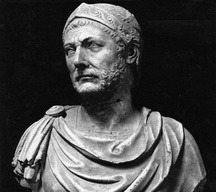
“God has given to man no sharper spur to victory than contempt of death.” - Hannibal
Hannibal Barca of Carthage (247 BC - 183-181 BC) is one of the most interesting historical figures of all time, at least to me. As an amateur historian, I’ve studied Hannibal’s campaigns in the Second Punic War for many years now. Not to brag, but this is one of the few topics that I do consider myself an expert in. I first learned about the Legend of Hannibal from one of my teachers in either 7th or 8th grade (I still vividly remember the exact moment when he talked to us about this). I’ve never forgotten about Hannibal’s story because it’s a story that’s stranger than fiction, but it’s one of the best underdog stories that’s ever been recorded in human history. I’ve personally: read one book, watched one movie, watched multiple documentaries, and read multiple articles on Hannibal. He’s a big inspiration to me and a historical figure that has given me enormous strength over the years. Let me summarize everything that I’ve learned over the course of at least 15+ years.
Background Context
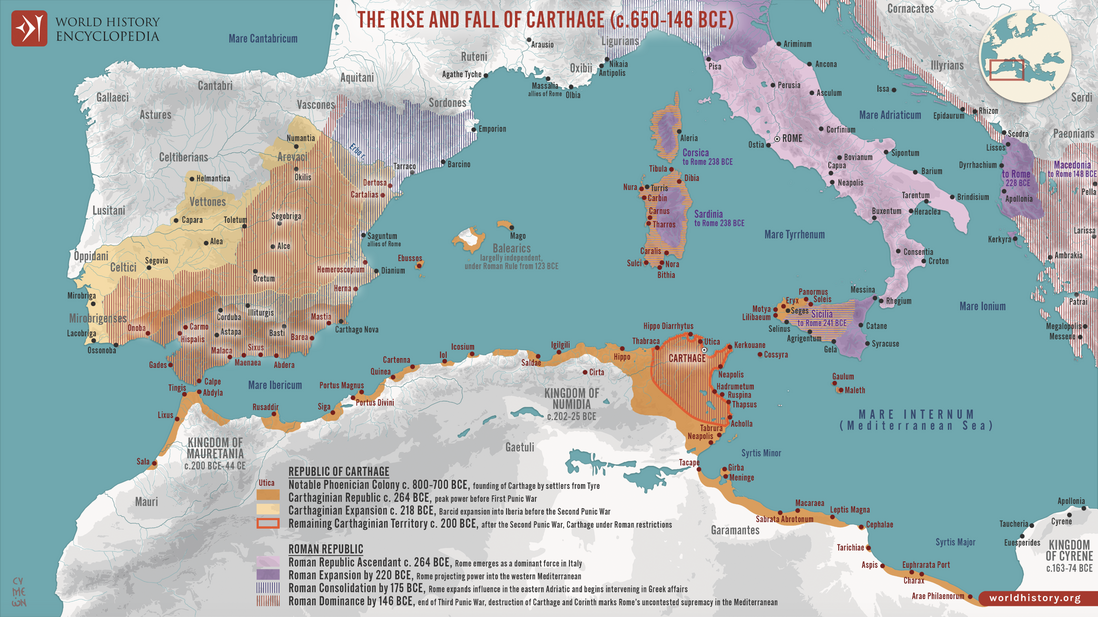
Before we get to Hannibal, I have to set the context of who the Carthaginians were and the state of the world Hannibal was born into. Who were the Carthaginians that we hear mentioned in obscure history books or quickly referenced in movies? The Carthaginian Republic (814 BC - 146 BC) was an ancient civilization that occupied the coastal lands of modern-day North Africa, with the heart of the republic located in modern-day Tunisia. The republic started expanding out of the city of Carthage (near modern-day Tunis, Tunisia) and dominated the coastal lands of North Africa and modern-day southern Spain, with dreams of becoming a great power. The Carthaginians were a people known especially for their strong maritime trade/commerce and naval power. The Carthaginians were also a proud people who envisioned having total hegemony over the Mediterranean basin, the region of land and sea surrounding the Mediterranean Sea. But as fate would have it, they had a rival based in modern-day Italy that also had the same idea: the Roman Republic (509 BC - 27 BC; note that these are the dates of the Roman Republic, not the Roman Empire). The Roman Republic derived strength from its strong land army and started expanding out of modern-day Rome, Italy, after the legend of Romulus and Remus established the city of Rome. Both civilizations expanded and they were on a crash course, with everything boiling over as to who would win control over the territory of Sicily. Because of Sicily alone, the two powers fought a bitter 23 year war: the First Punic War (264 BC - 241 BC). The First Punic War ended badly for Carthage, where they were expelled from Sicily and had to pay large reparations to Rome; Sicily also became Rome’s first overseas territory. Hannibal’s father, Hamilcar Barca, was the leading commander of the Carthaginian Army in Sicily and this foreshadowed what was to come.
Hannibal was born in Carthage (247 BC), along with siblings Hasdrubal Barca, Mago Barca, and three sisters, as the oldest son of Hamilcar Barca and his wife. The Barcid family was a wealthy, upper-class, and aristocratic family that had immense military and political influence within Carthaginian society. After the First Punic War and the loss of Sicily, Hamilcar Barca and his forces started focusing on the contested piece of land that Carthage already had a foothold in: Hispania (modern-day Spain). Hamilcar led a push to expand territorially in Hispania to recover lost resources from the war and build a new base of wealth and military strength. He would often take young Hannibal on his campaigns in Hispania, after Hannibal begged to go. Hamilcar made young Hannibal promise and swear an oath at age 9 to “never be a friend of Rome.” Hamilcar unfortunately drowned in battle when Hannibal was 18 years old. Hannibal’s brother-in-law Hasdrubal the Fair subsequently took control of the forces in Hispania and Hannibal served as an officer under Hasdrubal the Fair, further developing his military acumen and war experience. When Hasdrubal the Fair was assassinated, Hannibal took control of the army as commander-in-chief at age 26 (221 BC) after years of training under his father and brother-in-law in the art of war. What happened next was nothing short of legendary.
The Second Punic War (218 BC - 201 BC)
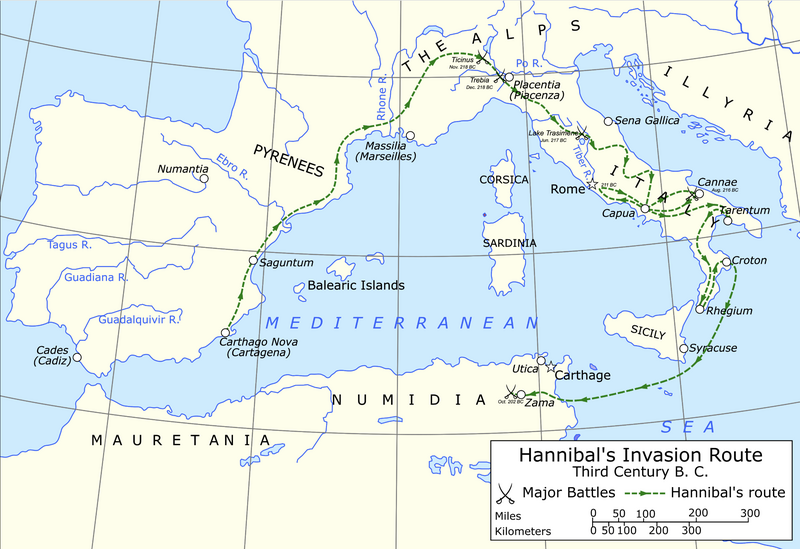
Hannibal took command of the Iberian forces (Iberia is the Greek name for modern-day Spain) and set off immediately to work. He spent two years consolidating his holdings in Hispania and achieved fantastic results as a first-time general, consolidating all the territory south of the Ebro River under Carthaginian control. Rome saw Hannibal’s rise and feared Carthaginian influence in Hispania; therefore Rome made an alliance with the pro-Roman city of Seguntum, which was south of the Ebro River. Hannibal, for better or for worse, decided to lay siege on Seguntum for eight months and brought the city to its knees. He lost many troops, resources, and was personally injured in the eight month siege, but was relentless in his objectives. This gives an idea of who Hannibal was as a person at his core: he relentlessly pursued his objectives. Rome sent a delegation to Carthage headed by Fabius Maximus demanding answers. When the two sides could not agree on what happened at Seguntum and get to a resolution, the Roman Republic declared war on Carthage and this launched the Second Punic War.
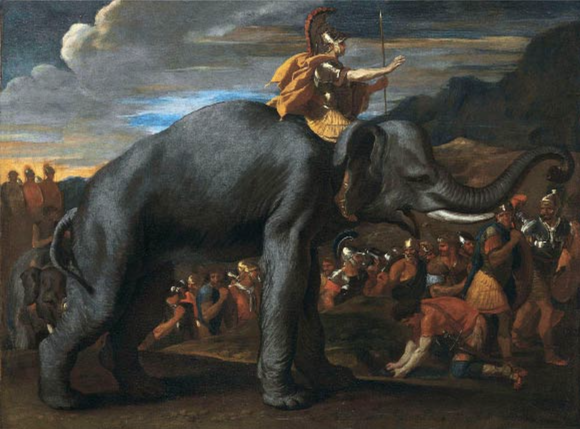
With Seguntum locked-in as his base of operations in late 219 BC, Hannibal spent a significant amount of time in the winter of 219 BC organizing his troops and resources. He had an eclectic set of troops, with infantry made up of Libyan/African, Iberian troops and cavalry made up of Numidian troops (Numidia is modern day Algeria and Tunisia). Hannibal’s goal was always to attack Rome directly and he had this goal mapped out in his mind for years. Many in the Roman political and military establishment believed in the beginning that the war was going to be fought through sea battles, in Iberia/Hispania, or through a land invasion of Carthage. Hannibal had other plans. He devised one of the most audacious plans in human history: crossing over the Alps (the highest and most treacherous mountain range in Europe) directly into Italy to wage war on the Roman heartland. This was unfathomable to many in Rome because the Alps were thought to provide the ultimate protection and the idea that they could be crossed seemed impossible. But not to Hannibal, who said the inspiring phrase: “I shall either find a way or make one” at the prospect of crossing the Alps! In spring of 218 BC, Hannibal set off from Seguntum with ~94K infantry, ~12K cavalry, and famously 37 African elephants to cross the Alps and attack Rome directly. A large portion of his troops were garrisoned in Hispania for protecting territory, so only around ~50K infantry, ~9K cavalry, and the 37 African elephants actually made the treacherous journey of crossing the Alps. The journey was formidable…
To be continued; still working on this…