Book Review: Plutarch's Lives (Vol. 1)
Introduction
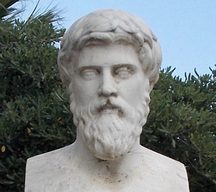
I’ve started reading the book Plutarch’s Lives by the Greek historian and biographer, Plutarch (50-120 AD). This book is so big that it’s broken down into multiple volumes and will probably take me many years to finish reading end-to-end. Plutarch’s Lives has influenced many consequential people throughout history, including many of America’s founding fathers like: George Washington, Alexander Hamilton, and Abraham Lincoln. The book is a biographical collection of venerated Greeks and Romans, forming 23 pairs of lives that are then compared and contrasted. Most of the book is present and preserved from antiquity, but parts of the book are missing. I’ve become an amateur historian in the past few years because of the following reason: we can only know where we’re headed in the future by studying where we’ve been in the past. By developing character and virtue, we can all be better individually and that will translate into society being better collectively. These are my thoughts and notes as I work through Plutarch’s Lives (Vol. 1) - A. H. Clough!
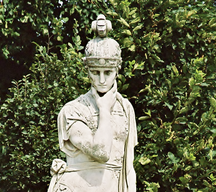
Fabius Maximus
“But I am not derided.” - Fabius’ Attitude When Political Enemies Tried to Humiliate Him
“… meaning that only those were really insulted on whom such insults made an impression, so Fabius, with great tranquillity and unconcern, submitted to what happened, and contributed a proof to the argument of the philosophers that a just and good man is not capable of being dishonored.” - Plutarch
Fabius Maximus (280-230 BC) is an often forgotten historical figure, even though he played such an important role in world history. This is perhaps why Plutarch profiled Fabius as part of his book; Fabius was obviously someone with enough stature that Plutarch did not want to forget about him. Fabius, called “the delayer”, was a statesman and general of Rome who most famously implemented the “Fabian Strategy" (now called war of attrition or guerilla warfare) during the Second Punic War (218-201 BC) against the military genius, Hannibal Barca of Carthage. To set the context, the Second Punic War was a military conflict between a great power (Rome) and a formidable rival (Carthage) as both fought for hegemony in the Mediterranean Basin. Hannibal is remembered today as a force of nature who almost brought down the Roman Republic by himself. He is one of the most fascinating and inspiring people in all of human history and someone who I’ve studied for many years now. My teacher told me about Hannibal when I was very young and I’ve always been fascinated by the legend of Hannibal. I will write a more detailed profile of Hannibal in due time.
Back to Fabius! Fabius was one of the few people who saw with clear vision what Rome was actually dealing with in fighting Hannibal as an opponent during the heights of the Second Punic War. After Hannibal daringly crossed the Alps with war elephants into the Italian heartland and won a succession of battles at the Battle of Ticinus, Trebia, Trasimene, and most famously Cannae (216 BC), Rome had lost ~20-25% of all its fighting-aged men. The republic was at the most precarious position it had ever been in, with a STRONG possibility that it might fall. Fabius was one of the few people in a position of authority who was calm during this period of chaos. He assumed dictatorship of Rome during this period of high uncertainty. He refused to engage Hannibal in a head-on battle, knowing the strategic, tactical, and logistical genius of the opposing side would be formidable. He invented and implemented a strategy of attrition and guerilla warfare, cutting off Hannibal’s supply lines as well as doing hit-and-run attacks. His strategies were hugely unpopular; people viewed him as a weak and ineffective leader for the majority of his dictatorship and that this was not how to fight a war! Yet his strategies resulted in not one more major loss and resulted in Hannibal being cut off from reinforcements from Carthage. This allowed the young general Scipio Africanus to launch a counterattack in Hispania (modern day Spain) as well as Carthage itself, forcing Hannibal to finally leave the Italian heartland after 15 years of terror! Fabius never lived to see the end of the war and the victory, but the war would not have been won without him. Fabius had the following character traits:
- Fabius was very deliberate in his speech. He thought things through before speaking, and spoke with a sense of eloquence and deep wisdom.
- Known as “the delayer”, Fabius was both cautious and confident in his actions. He often took a lot of time to make plans and think things through very carefully. Then with everything set up, he was totally ready to put things into action.
- Fabius showed tranquility and unconcern when he was attacked by his political enemies. He did not react to personal attacks nor did he retaliate, showing total grace.
- Towards the end of his career, Fabius let pusillanimity (fear of risk taking) and jealousy get to him and he tried to stop Scipio Africanus’ success by “delaying” things for the young and rising general.