Book Review: The Instructions of Ptahotep
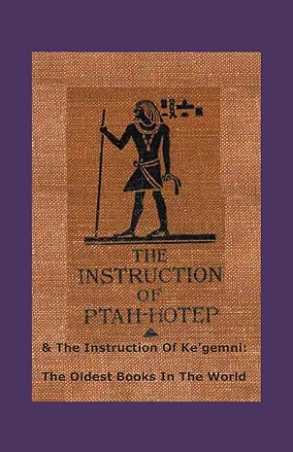
The Instructions of Ptahotep (pronunciation: pa-tahoe-tep) is a book I never expected to read ever. I don’t imagine many people have heard about the Instructions of Ptahotep, let alone actually reading it. I did not even know about it until I found it randomly one night through a Google search. I tend to read a lot of classical texts as well as books that are not published anymore. I enjoy finding random classics on the web from places like Project Gutenberg and just reading them based on my own self-interest and curiosity.
The Instructions of Ptahotep were discovered by Egyptologist Emile D’Avennes in 1847. Ptahotep was a vizier of Egypt (highest government official serving the Pharaoh himself) and is estimated to have lived around ~2400 BC. Therefore, it is estimated that the instructions were written down >4000 years ago. The book is about Ptahotep’s life lessons in his advanced old age as he was about to retire from his position as vizier. The Pharaoh approved Ptahotep’s younger son to succeed him as vizier, however before the young man could take his position of authority, the Pharaoh asked Ptahotep to write down all the life lessons he’s learned in a set of maxims. There’s 43 total maxims and I took the time to read all of them carefully.
My biggest takeaway is that the maxims are very similar to Christian teachings. The maxims are similar to say the book of Proverbs in the Old Testament, which I’ve also read very carefully and comprehensively. The instructions are pretty cool and pretty practical too. They are especially helpful for young men as they come of age in how to act with honor, dignity, and grace. I’m going to select some snippets from some of the maxims I liked for future reference. Of course the English translation is not written in a modern way, but I think overall the ideas are crystal clear.
- Instruction 1: “Be not proud because thou art learned; but discourse with the ignorant man, as with the sage.”
- Instruction 3: “Great will be the applause on the part of the listeners, and thy name shall be good in the knowledge of princes.”
- Instruction 5: “If thou be a leader, as one directing the conduct of the multitude, endeavour always to be gracious, that thine own conduct be without defect.”
- Instruction 11: “Follow thine heart during thy lifetime… Diminish not the time of following the heart.”
- Instruction 19: “If thou desire that thine actions may be good, save thyself from all malice, and beware of the quality of covetousness (a.k.a. greed or envy), which is a grievous inner malady.”
- Instruction 25: “If thou be powerful, make thyself to be honoured for knowledge and gentleness.”
- Instruction 34: “Let thy face be bright what time thou livest. That which goeth into the storehouse must come out therefrom; and bread is to be shared.”
- Instruction 36: “Vice must be drawn out, that virtue may remain."
- Instruction 38: “He that obeyeth becometh one obeyed.”
- Instruction 42: “Be thine heart overflowing; but refrain thy mouth.”
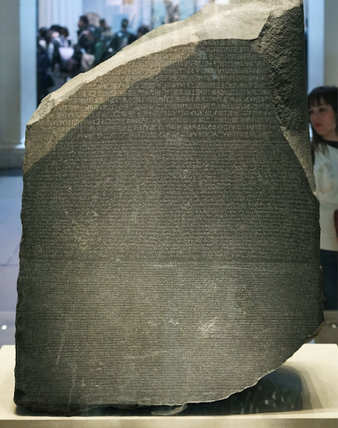
Side note: one interesting thing I did not know was that the interpretation of Ancient Egyptian writings in the form of hieroglyphics was a lost art for centuries until the early 1800s. It all dates back to Napoleon Bonaparte’s Egypt campaign back in 1798 as part of the War of the Second Coalition. Napoleon took with him 100+ scientists, scholars, artists, and engineers to understand Egyptian culture and make the knowledge widely known to the Western world. One person he took Pierre-François Bouchard was a French Army officer and engineer. He’s most famous for discovering the Rosetta Stone, which made the interpretation of Ancient Egyptian texts understandable for the first time in a millennium at the time of its discovery in 1799. The Rosetta Stone displays an Egytian decree in three different forms: Hieroglyphics, an alternative Egyptian script, and most importantly Ancient Greek. This allowed Egyptologists to interpret Hieroglyphics by referencing the Ancient Greek. With an understanding of the Hieroglyphics language structure, further work allowed Egyptologists to translate writings such as the Instructions of Ptahotep into other languages like English. It’s pretty cool that this knowledge is from a few millennium ago and we can still understand it!