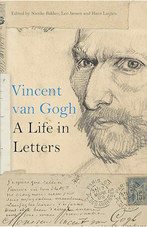
Book Review: Vincent Van Gogh - A Life in Letters
“Anyone who has a solid position elsewhere, let him stay where he is but for adventurers as myself I think they lose nothing in risking more.” - Vicent Van Gogh
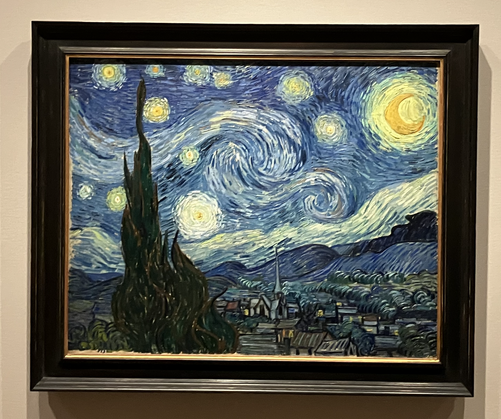
I finished reading the book Vincent Van Gogh - A Life in Letters after a little over a year. This was an unbelievably long book to read, a super challenging read and it took endurance to finish. I saw my first and perhaps the most famous Van Gogh painting The Starry Night in person back in December, 2024. I did an art project on The Starry Night in middle school and it was cool for me to see it at the Metropolitan Museum of Art (New York City) decades later. I did not know much about Dutch painter Vincent Van Gogh before I read this book; it’s interesting that we all know the paintings, but not the person behind the famous paintings. I’m glad that I decided to investigate because I’ve learned a lot.
This book is an intimate account of Vincent Van Gogh’s last 10 years of life, from around age 27 to age 37 in the form of personal letters. Van Gogh died by suicide at age 37 in Auvers-sur-Oise, France (1890) while he was recovering from a nervous breakdown. This was a person who lived life unconventionally and consistently lived on the edge; this was someone who took huge risks and sacrificed everything for his art. People know Van Gogh as a brilliant painter, but most people don’t know that he was also a beautiful writer. Most of the letters were written to his younger brother and benefactor Theo Van Gogh, who was more mentally stable and held a traditional white collar job. Without Theo’s support, Vincent would never have become an artist and Theo died six months after Vincent, grief-stricken at the death of his older brother. The two brothers’ graves are right next to each other. Van Gogh is celebrated as a genius today, but the letters he wrote in his time paint a completely different picture. As a struggling artist, Van Gogh lived by meager means for most of his life, had problems with his family, had mental health issues (possibly due to bipolar disorder), and lived as an outcast with very few friends. He thought of himself as a second-rate artist, but kept painting because he loved the craft of painting so much at the expense of literally everything else (mental and physical health, personal life, social life, etc.). Here are the major events in Van Gogh’s life:
- Born in 1853 in the Netherlands to a father that was a pastor and a mother that was a homemaker.
- Worked as an art dealer at the firm Goupil & Cie (still in business today) in his early to mid-20s.
- From age 25 to 27 (1878-1880), worked as a preacher to Belgian coal miners and wanted to continue a career in ministry. Lived in poverty and abject conditions during this period. Decided to pivot away from religion and focus more on art.
- From age 27 to 32 (1880-1886), developed as an artist in his own way without formal training, mostly producing sketches and some early paintings. Moved around frequently in the Netherlands and Belgium, living in cities such as: Amsterdam, Brussels, The Hague, Eindhoven, etc.
- From age 32 to 34 (1886-1888), moved to Paris to live with his brother Theo Van Gogh. Learned about the Impressionist movement and was acquainted with some of the leading artists of the time, such as Toulouse-Lautrec and Gauguin.
- At age 35 (1888-1889), moved to Arles, France, which is in the south of France. Started heavily painting and using vibrant colors, discovering his true style and was absolutely consumed by work. Had a nervous breakdown during an argument with fellow artist Paul Gauguin and cut off parts of his own ear.
- From age 36-37 (1889-1890), admitted himself to the Saint Paul de Mausole asylum for the insane in Saint-Rémy, France. Continued working feverishly, producing some of his most famous paintings. Decided the asylum was inhibiting his creativity and moved to Auvers-sur-Oise, France, which is on the outskirts of Paris. Committed suicide shortly after.
Reading Van Gogh’s handwritten letters gives us insights into the mindset of a totally obsessed artist. Literally all the letters from the last 10 years of his life talked about painting and the intricacies of painting, at the expense of everything else. Reading this book has reinforced to me that genius goes hand-in-hand with crazy: they are two sides of the same coin. You can’t have one without the other. Van Gogh was a totally unconventional thinker and lived like it. He was an outsider who saw the world more clearly and more truthfully than someone who lived a more conventional lifestyle would have. He had insights into truth vividly and some of his ideas were totally unconventional, yet very practical and super interesting, with some quotes that just take your breath away. There were multiple times throughout reading this book where I had to stop, pause, and reflect on how profound the words were. Here are some of the Van Gogh quotes and lessons that I’m writing down as record-keeping for the future.
“When the thing depicted and the manner of depicting it are in accord, the thing has style and quality.”
Style is very important. It comes from studying the past and from expressing one’s self: Style was very important to Vincent Van Gogh. Vincent saw himself as someone who was trying to live up to the artists of the Renaissance, other artists of the past he so admired, as well as his contemporary artists. He learned all that he could from others, and then decided to unleash his own style and creativity. Feelings, emotions, and self-expression were the most important things that he wanted to express through his art work for posterity, which he achieved. This is a good example for creative and iconoclastic thinkers on the right mindset to have: learn from others, but always add your own touch into whatever you’re doing.
“The principal characteristic of a painter, I imagine, is to paint really well; those who can paint, those who can do it best, are the germs of something that will continue to exist for a long time, just as long as there are eyes that enjoy something that is singularly beautiful.”
One has to believe in what one’s doing, regardless of whether there’s external validation or not: The central focus of Vincent Van Gogh’s life was work. He was always working, working so hard to the extent that it affected his health and personal life. The passion and dedication to the craft of painting was honestly awe-inspiring. Vicent wasn’t worried about success or exposure like many do; he showed up whole-heartedly everyday and painted in a way that he knew how to do best. He showed up everyday because the process was the prize, not the need to be validated externally. There is honor in just producing the art. This I deeply respect and is truly something that’s missing in our society today. Always focus on the process!
“My assertion is simply this: that drawing a figure academically correctly, that an even reasoned brushstroke have little… to do with the needs, the urgent needs, of the present day in the field of painting.”
Academic knowledge is irrelevant; doing through practice is most important: This was a profound lesson for me and something that I don’t want to forget. We often trust so much in academic knowledge and doing things the “right way.” Yet I learned from this book the following: academic knowledge is irrelevant and that there is no “right way.” Van Gogh often wrote about the fact that he, today regarded as one of the best artists in human history, also had no idea what he was doing. This idea of play and just doing things because you really enjoy it is truly a lost part of who we are today. I think academic institutions kill the creativity and joy to just explore, make, build, etc. I never want to forget this lesson and will try to think less and just do stuff going forward.
“Now likewise, everything in men and in their works that is truly good, and beautiful with an inner moral, spiritual and sublime beauty, I think that comes from God…”
Ability ultimately comes from God and the divine: Van Gogh came from a religious background and wanted to be a preacher. He read large swaths of the Bible and that had a profound influence on his mindset and work. He became more agnostic in his 30s, but was very devout and religious in his 20s. I really like this quote because it shows a certain humility to it. Van Gogh is acknowledging that doing good work is not the result of our own abilities, rather the gift comes from a higher power. I respect this a lot because this kind of mindset keeps someone humble and is a guardrail for arrogance and over-confidence. To me the sweet spot is humble, but confident and that’s the mindset that I’ve tried to embrace for the past few years.
“Possible that these great geniuses are no more than crazies, and that to have faith and boundless admiration for them you’d have to be a crazy too.”
Genius and the sacrifice it takes to achieve something that’s never been done before is not for most people: Vincent Van Gogh saw clearly the fine line between genius and crazy. One can never be viewed as a genius without having the other side too, which is crazy: crazy enough to risk physical and mental health issues, social ostracism, being misunderstood, and being willing to put everything on the line. Very few people are willing to lay it all on the line and sacrifice everything, for fear of being judged by others and being perceived as “weird.” But the irony is this: being “weird” is exactly what’s needed in order to bring something new to the world. Being conventional will never result in new ideas or new innovations that moves society and the human condition forward. So all of us need to decide who we are, and how much risk we are willing to take in order to be different. Otherwise, we resign ourselves to living comfortably, but insignificantly at the end of the day.
These were some of my reflections after reading the book: Vincent Van Gogh - A Life in Letters. I hope it was thought-provoking. :)