Essay Review: On the Shortness of Life - Seneca
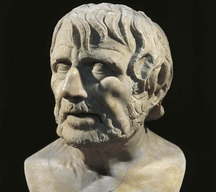
On the Shortness of Life by Seneca
The essay On the Shortness of Life by Lucius Annaeus Seneca (Seneca), philosopher and statesman of Rome, is exactly the type of reading material that I enjoy (if you couldn’t tell already, Ancient Rome is an obsession of mine). Seneca is one of the most respected philosophers in Ancient Rome. Born into a wealthy family in Córdoba, Hispania (modern-day Spain), Seneca moved to Rome as a child and received a very good education in philosophy and the liberal arts. He rose to prominence as a politician and was elected a quaestor (finance official who managed treasury matters) in the Roman Senate in his early career. In AD 41, Seneca fell out of favor with Emperor Claudius and was exiled for eight years to the island of Corsica. A big remote island in the middle of the Mediterranean Sea, Corsica was a super rough place to live. Because of his talent for the liberal arts, Seneca was called back to Rome at the request of Nero’s mother to become the full-time tutor of future Roman Emperor Nero. Nero is one of the most controversial figures in all of human history, and turned on Seneca as he gained power. In AD 65, Seneca died by forced suicide at the request of Emperor Nero and he died at age ~67-68.
Seneca wrote On the Shortness of Life the year he returned to Rome after eight years of pure hell living in Corsica. This was a person who lived a rich life and then suddenly lost everything. The essay is written to an associate of his, Paulinus, and is only around 15 pages long. In the essay, Seneca tells Paulinus what’s truly important in life after losing literally everything. This essay is human wisdom and not divine wisdom. Yet in terms of human wisdom, this is about as good as it gets and this was a deeply thought-provoking short essay. There are so many interesting ideas in the essay. I wanted to write down the quotes that I found most interesting for future reference. We can learn a lot from the ancient world because the people of the past dealt with the same problems that many of us deal with today. Why not learn from the experiences of others? We can be mentored by living people as well as dead people; the key is just to be open minded. The essay contains the following key motifs that are still prescient today:
Motif #1: Time is always ticking and stops for no one; this is a brutal reality of life. We all waste so much of the one resource that’s most important to be economical with. We waste time because of distractions, and so the key is to eliminate the number of distractions we have. To me, social media is the biggest distraction of them all in today’s day and age. Better to just not use social media unless one has to, such as using LinkedIn for networking or a job search. Even then, I believe it’s important to moderate usage and be super diligent in moderating usage. I have not actively used social media since 2019 and I’m very proud of myself for this.
It’s not that we have a short time to live, but that we waste much of it. Life is long enough, and it’s been given to us in generous measure for accomplishing the greatest things, if the whole of it is well invested. But when life is squandered through soft and careless living, and when it’s spent on no worthwhile pursuit, death finally presses and we realize that the life which we didn’t notice passing has passed away.
Men are thrifty in guarding their private property, but as soon as it comes to wasting time, they are most extravagant with the one commodity for which it’s respectable to be greedy.
Motif #2: A good life is determined by how well we use our time. Only by using our time well and doing productive things will a person reach his or her full potential. Moreover, Seneca argues that it’s important to embrace all three tranches of time: the past, the present, and the future. A person can learn from the past, use the present to do useful things, and anticipate the future. This is absolutely brilliant and a fantastic way to conceptualize what time really is: a finite resource that deserves our utmost care. It’s so simple and basic common sense, yet this is what makes it so profound and worthy of rememberance. The clock is always ticking and a day wasted or a moment wasted will never come back again.
So the sage’s life is ample in scope, and he’s not constricted by the same limit that confines others. He alone is released from the limitations of the human race, and he is master of all ages as though a god. Some time has passed? He holds it in recollection. Time is upon us? He uses it. Time is to come? This he anticipates. The combining of all times into one makes his life long.
But for those who forget the past, disregard the present, and fear for the future, life is very brief and very troubled. When they reach the end of it, they realize too late, poor wretches, that they’ve been busied so long in doing nothing.
Motif #3: Though it’s unintuitive, it’s often true that people who have power and status dream of giving it all up to live a more simple, peaceful life. It’s all a big optical illusion. People who have power and position in society may seem like they have it all, but the truth is that they may or may not be that happy in reality. It’s really hard to know how someone is really doing. Never trust outer appearances or feel bad about your life based on what other people are doing. It’s important to focus on what we can control, which is 1) our own attitude and mindset each and every day and 2) our self-comparison with other people, which should be non-existent. If we can control these two things, we’ll live a more balanced and present life. Nothing else matters.
(Talking about Emperor Augustus Caesar, one of the most powerful Emperors of Rome): He who saw that the world depended on him and him alone, who determined the futures of individuals and nations, he was happiest in looking forward to that day on which he would lay aside his greatness.
So, when you see a man repeatedly taking up the robe of office, or a name well known in public, don’t envy him: those trappings are bought at the cost of life.
Motif #4: Know when to stop and enjoy life. Ambition is good, but know when to stop and enjoy life. Seneca believes nothing is ever guaranteed in life and that a person runs into problems as a tryhard in old age. It’s very dangerous when a person doesn’t have the same energy and health as in their youth, yet they can’t accept this reality. They still strive for things as though in their youth, which the essay cautions against. The person doesn’t know when to stop and call it quits and to be frank, this all comes down to pride at the end of the day. No one wants to feel like they’re old, yet we all have to accept this reality and embrace it; it’s nature. At a certain point, it’s most important to just enjoy life! This hits home with me and is something that I need to incorporate more into my mindset. My life is not the most balanced, but it’s something I need to work on. I will try harder with respect to this!
Life will be driven on through one preoccupation after another; we shall always pray for leisure but never attain it.
You’ll hear many say: “After my fiftieth year I’ll retire to a life of leisure; my sixtieth year will bring release from all my duties.” And what guarantee, may I ask, do you have that your life will last longer?
Some map out new aspirations for their extreme old age as if in their youth, and they succumb to weakness amid their great and immoderate endeavors.
Overall, I really enjoyed reading On The Shortness of Life. There were some ideas in the essay I agreed with, and some ideas that I did not agree with. I did not agree with the idea that you should hoard all your time and use it for yourself exclusively, which is what Seneca implied. I believe this is not totally right because we are social creatures that live in a society. I believe it’s important to consider how to use one’s time not just for ourselves, but also for others, our local communities, as well as society at large. This is the only critique I have for the essay. But overall, I really liked this essay and would recommend it as a good read to anyone. I hope you learned something from this blog post!